
Working government technology that surprises you is the problem. We need to reset our expectations from gov-tech.
Two interesting things happened in February of this year:
First, our project in partnership with Ministry of Statistics and Programme Implementation went live:


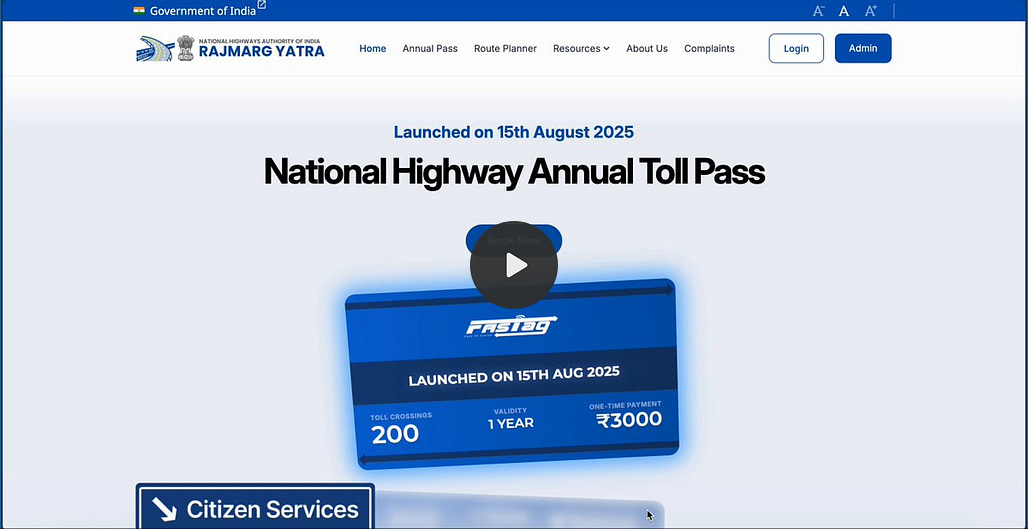
Second, National Highway Authority of India’s redesigned website dedicated to purchase of FASTag Annual Pass went live [see it].

The former was largely received with disbelief and surprise that government and MCP could go together. For those that don’t know, Model Context Protocol allows third-party apps to connect to your favourite AI agents. That’s how Claude can connect to your Google Calender because Google exposed their service via an MCP server. We worked with Ministry of Statistics and Programme Implementation to expose Indian Government’s official statistics (CPI, National Income, PLFS etc) to your AI Agents via an MCP server so you can query, analyze them etc in your existing workflows.
The latter was NHAI’s consumer facing interface for FASTAG, highway complaints and more recently the purchase of FASTAG Annual Pass. I would urge you to open the site to understand why it is different from regular government websites. The tweet above was part of a discussion sparked by a US government’s affordable medicine website launch and people asking why our government couldn’t do such a thing.
Both arrived the same week. Both provoked the same underlying reaction: surprise that government technology could actually be good anchored by an example.
That surprise is the problem.
It is not that we don’t know better is possible. 9 to 6, most of us in government experience a certain flavour and quality of technology. 6 to 9, we experience what’s possible in technology otherwise, as we use private apps which never crash midway, have OTPs that come on time. Externally too, citizens show dismay from time to time, but it doesn’t convert into heightened expectations or comparisions. In our heads we have compartmentalized both experiences as separate realities. Rather, these dismays are categorized as things that will never change. Sarkari hai, aur kya ho sakta hai. (It’s government, what to expect?).
The compartmentalization is too strong. The imagination of a better reality has to come from within the government ecosystem.
Last year, Richa and I, co-founded Bharat Digital, a non-profit dedicated to solving gov-tech as a systems problem. Increasingly, policy outcomes depend on the state’s capacity to implement or leverage technology. But the government’s capacity (or ability) to do this properly cannot be assumed across its length and breadth.
Both of us have combined 15 years inside the government implementing technology for some of India’s largest programs. So we have some first-hand experience on what are the problems but there is no easy fix here.
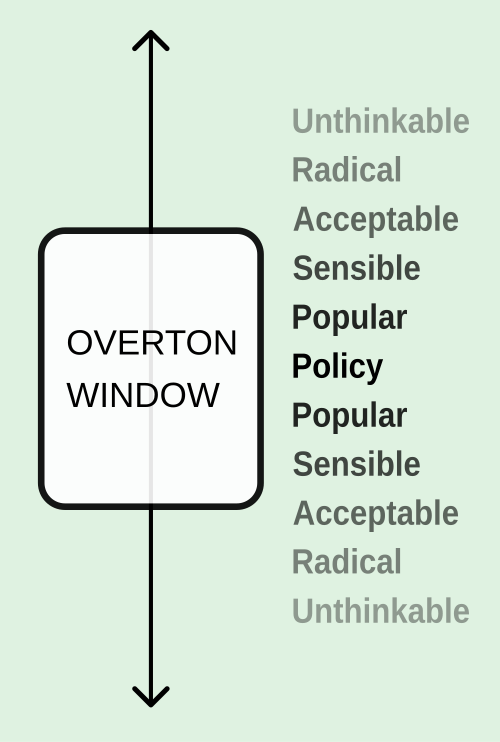
We’ve bucketed the problems in talent, systems and culture and we have experiments ongoing across all three buckets. But an emerging theme that cuts across is the need to shift gov-tech’s Overton window - for those not perennially online, is the range of policies and ideas considered acceptable to the mainstream at a given time. We need to shift the Overton window on government technology. We need to change what people expect from gov-tech and what is considered acceptable. People here includes citizens, gov-tech engineers and managers, bureaucrats, frontline staff — everyone.
We are trying to enable this shift in two ways: micro and macro.
For the micro, we run the Build for Bharat fellowship where we identify, equip and embed early career technologists and designers within government departments. The fellows work alongside existing government officials on strategic, meaningful gov-tech projects and augment the department’s capacity. To get a flavor of the projects, fellows work on, you can see the demo-day presentations from the previous cohort here. They range from using AI to reduce incident response times at the 112 emergency helpline, to redesigning Tamil Nadu’s online citizen facing services portal or attempting to predict Monthly Per Capita Consumption Expenditure which is calculated every 5 years, by using data from other fast-moving surveys.
Our fellows shift the culture of how software should be thought about and crafted within the department itself. In their own ways, they show and not tell. Through proximity and osmosis, we see senior stakeholders pick up the language of design, user-centered work, or modern tooling like GitHub Actions, CI/CD and Figma from the fellows. The culture moves not because anyone gave a lecture, but because someone in the room was simply doing things differently and people start expecting their own existing staff to function that way.
At the macro level, when some of these projects go live, it shifts the expectation of the larger public and other government departments: that this is doable and should be expected from the government. Its not limited to the projects our fellows pursue during the fellowship, but experiments which come out of Bharat Digital’s Labs. The MoSPI MCP server came out of Labs and the NHAI FASTag website was done by the fellows last year during the fellowship. These are macro moments. They exist publicly. Other departments can see them. Citizens can point to them. They become counter-examples and shift the window on the what is possible and expected.
We have many such projects under-way now - from reimaging frontline tech beyond top-down surveillance, bringing more accessible modalities to government open-data or designing more agentic workflows within departmental monitoring.
The goal here is to create these surprises, until they are no longer surprising. Not because the work becomes less impressive, but because good gov-tech becomes what people expect. That’s the window moving.
Harsh, I have an adjacent type question for you, how do I connect?